

Kieran Donoghue, CEO
£764m to be invested in Northern Ireland’s economy following Invest NI support
Our end-of-year performance shows how we’ve helped stimulate economic growth by supporting businesses to invest, increase sales, enhance skills, boost productivity, and encourage innovation.
Every £1 of our support contributed to £6 of investment in the economy.
2025-26 was the second year of our three-year business strategy (PDF), and we continued to build on the previous year’s work to support businesses across our strategic priority areas.
We delivered against 48 of our 56 activity targets in 2025-26.
Boosting business investment
We want to support more companies to invest in drivers of productivity because it sits at the heart of Northern Ireland’s long-term success; by improving productivity, businesses can be more efficient, have greater export potential, and sustain growth.
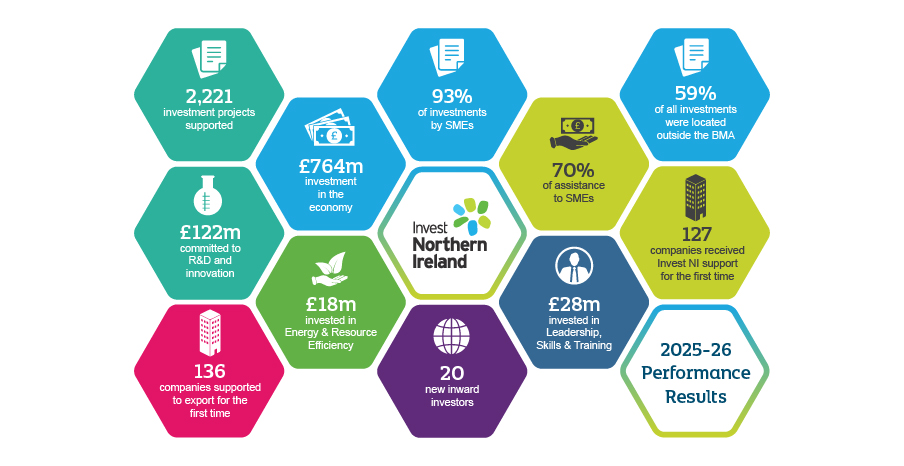
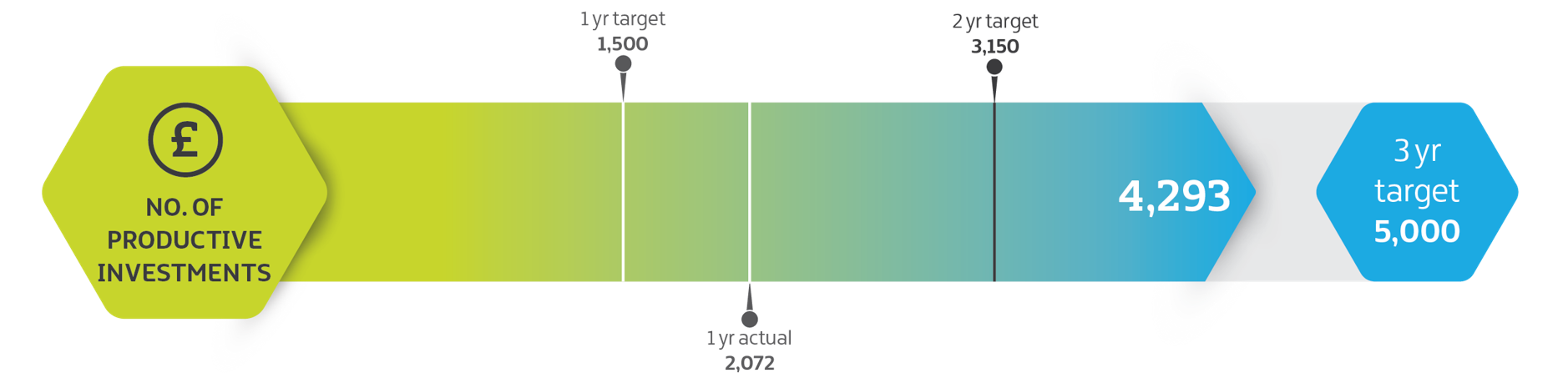
In total, we supported 2,221 investments in 2025-26 across a range of investment types, such as capital investment, job creation, research and development (R&D) and innovation, training, energy efficiency and exports. This means that at the end of year two, we are 86 per cent of the way towards achieving our three-year target of 5,000 productive investments.
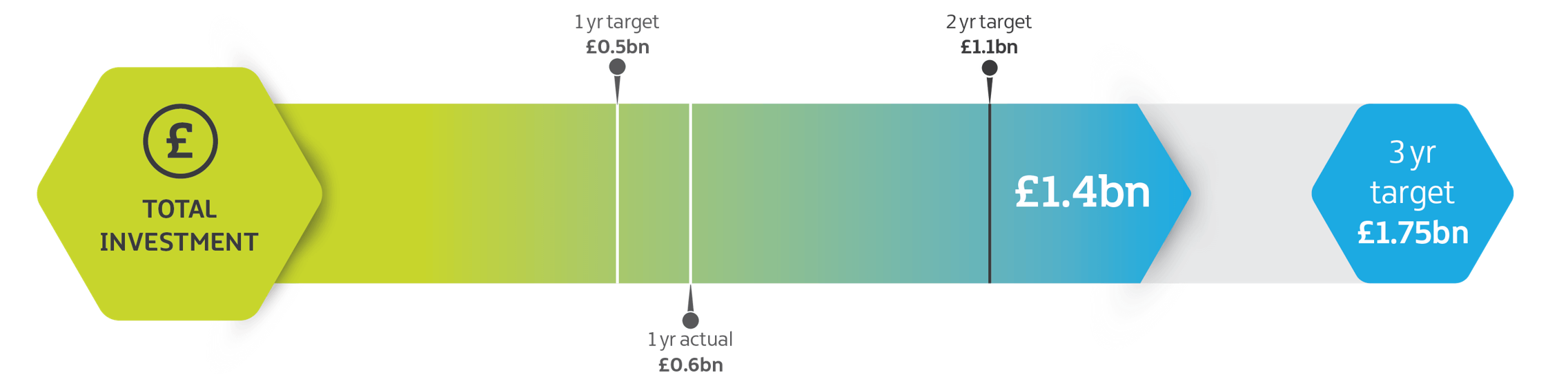
These investment commitments have the potential to generate £764 million in the local economy, an increase of 19 per cent compared to 2024-25. This brings us to a cumulative £1.4 billion in investment over the first two years of the strategy.
The majority of the investment projects we supported were by locally owned small and medium enterprises (SMEs).
We also support businesses to invest in employment, with a particular focus on creating good jobs which benefit NI’s wider economic health and help boost productivity and innovation. The support we’ve provided in 2025-26 will help companies to create 4,301 new jobs, up 45 per cent on the previous year. Of these new jobs, 85 per cent offer salaries above the Northern Ireland Private Sector Median (PSM).
Another way we support companies to invest and grow is through our Access to Finance funds. In May 2025, we announced a commitment of a further £100 million across three funds, with the potential to unlock a further £150 million of private sector investment.
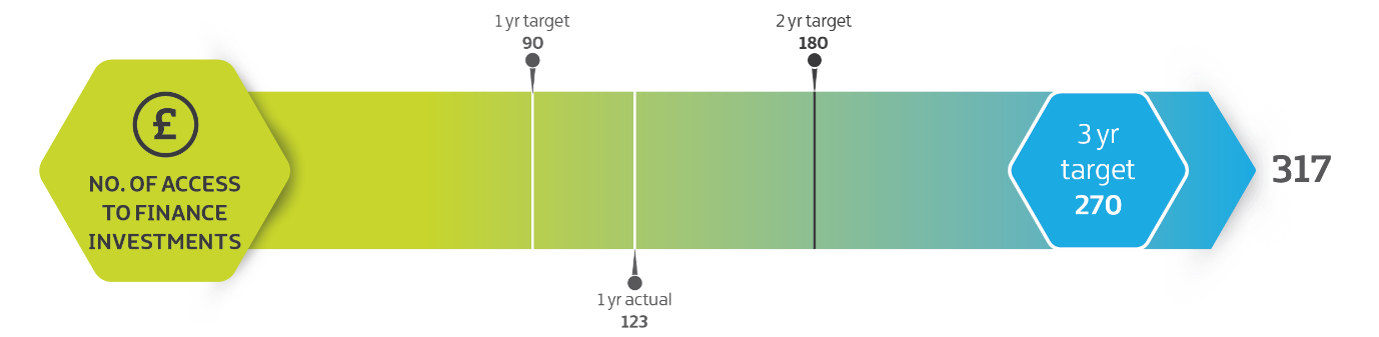
We set a three-year target to support a total of 270 Access to Finance investments with a value of £135 million. We have already exceeded these targets in just two years – delivering 317 investments worth £149 million.
Examples of investments supported in 2025-26
Read more about individual company investments we supported this year:
- Ready Egg invests £2.9 million to drive productivity and growth in Fermanagh
- Craftec Group secures over £1.3 million in sales to Great Britain
- The First Minister, deputy First Minister and Minister for Economy announce £12.9m investment by Cirdan to drive innovation, skills and create jobs
- Local watchmaker grows from home start-up to over £1.9m business
- Ten women entrepreneurs share £350k fund to boost business growth
- Three tech startups receive over £1.8m to accelerate growth
- McWhinney’s Sausages invests £2.2m to increase productivity and growth
- Financial support for Cowfield Design
Promoting places and partnerships
The Department for the Economy defines ‘regional’ as outside the Belfast Metropolitan Area (BMA). By the end of our Business Strategy period, we aim to deliver 65 per cent of our investments outside of the BMA.
In 2025-26, almost 1,300 of the investments we supported were outside the Belfast Metropolitan Area or were in projects which have the potential to impact all of Northern Ireland. Overall, these investments will generate nearly £359 million in investment in local economies and have the potential to create over 1,500 new jobs outside the BMA. 71 per cent of these jobs will pay salaries above the Northern Ireland PSM.
This represents 59 per cent of all the investments we supported and 48 per cent of the total value of investments. This means that we exceeded this year’s target for the value of investments but did not meet our target for the percentage of investments outside the BMA.
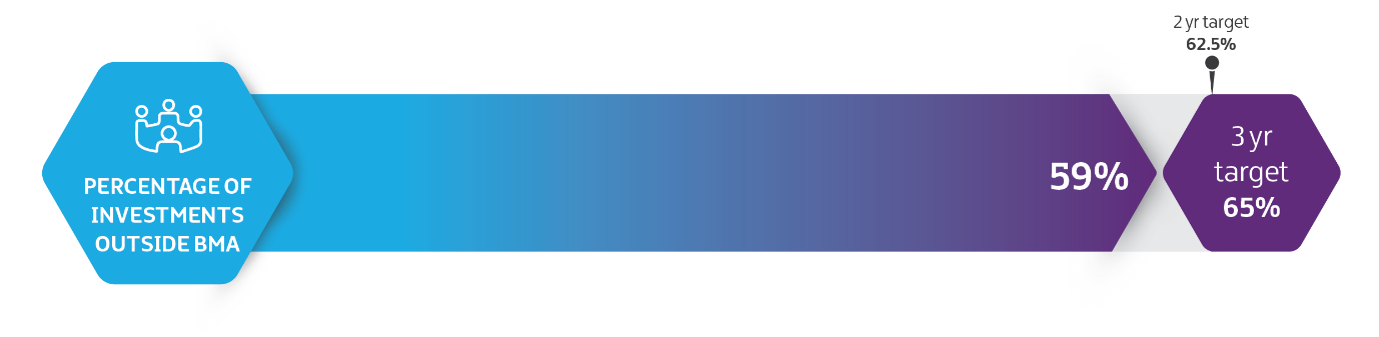
This investment in local economies and jobs will help build balanced growth and opportunity. The regional investments that we are supporting are increasing in value, but we need more of them to meet our year three target.
One of our main objectives when encouraging regional investment is identifying new businesses to onboard to Invest NI. Our regional office networks play a crucial role in this, and during the last financial year, our teams helped onboard 250 new clients to Invest NI.
We remain committed to regional balance and inclusive local investment and will continue to try to reach our three-year target of 65 per cent of investments delivered outside the BMA.
Promoting places and partnerships highlights
Read more about our regional investments and support:
- Lakeland Dairies announces £24.5 million investment to support growth and exports
- Kestrel Foods invests £5m to fuel global growth of its Forest Feast brand
- Inclusion Quality Mark is making a global impact
- KES Group celebrates expansion in Strabane Business Park
- Almost £40m to be invested in Causeway Coast and Glens, creating 199 jobs
- Ambition to Grow creates 160 jobs and £17m external sales across Southern Regional Office network
Accelerating innovation and skills
Investing in innovation keeps our sectors globally competitive, encourages skill formation, and helps collaboration with industry and academia – all of which boost productivity. We want to encourage more businesses to see value in R&D and to recognise when they are innovating.
In 2025-26, we assisted businesses to invest £122 million in innovation and R&D.
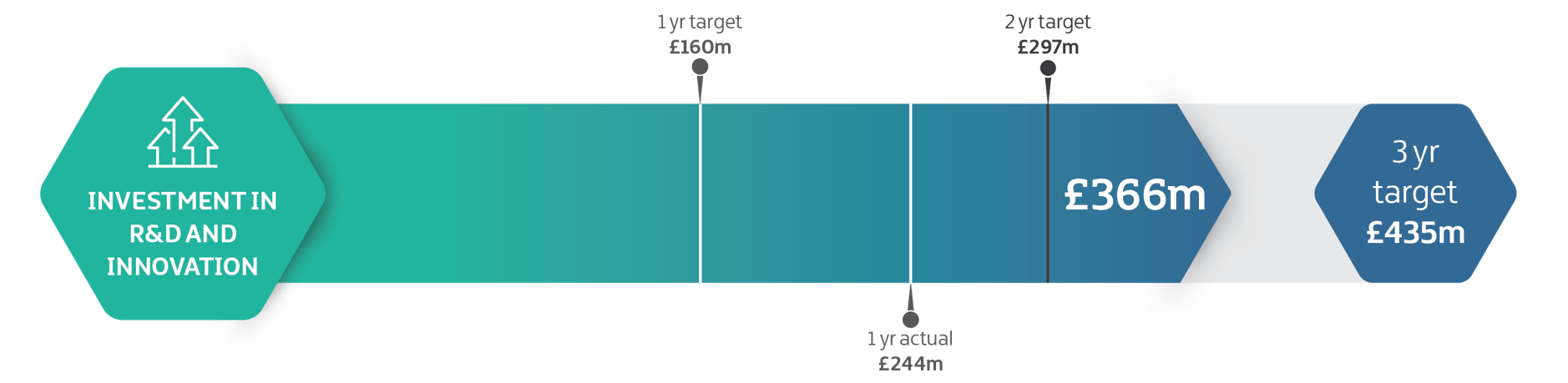
We set a target of 100 first-time R&D investors over the three years of the strategy and delivered 85 of these investments in year two. Delivery over the first two years of the strategy has exceeded our three-year target.
We also assisted 178 businesses to invest £28 million to drive productivity improvements by investing in leadership, training and skills development. Investment in these areas is vital to enhance the capability and productivity of businesses, which can lead to growth and future-proof skillsets.
Our goal for 2025-26 was to support £33 million investment in this area, which means we fell short of our target. Similarly to other missed targets, the number of supported investments were up but the value was down. This was due, in part, to the macroeconomic environment businesses were operating in last year. Rising costs and market uncertainty with tariffs and geopolitical developments made our clients more cautious about the scale of their investments.
Accelerating innovation and skills highlights
Read more about how we have accelerated innovation and skills:
- Teamworks Innovations strengthens its commitment to Northern Ireland with a three-year R&D project
- Butler’s Trailers & Marquees launches new range of Tiny Homes
- Local start-up Athru is scaling rapidly
- CattleEye to enhance its AI system capabilities with significant innovation investment
- Tech SMEs invest over £4 million to increase exports and create 33 jobs
- BT launches new programme to advance innovation and skills in Northern Ireland
- MCO Performance grow through the Business Innovation Grant
Driving global ambition
Exporting and external sales are crucial for economic growth and can be a catalyst for innovation, competitiveness and long-term resilience.
Our Northern Ireland and global teams help to promote our region on the world stage and support businesses to sell goods and services into new markets.
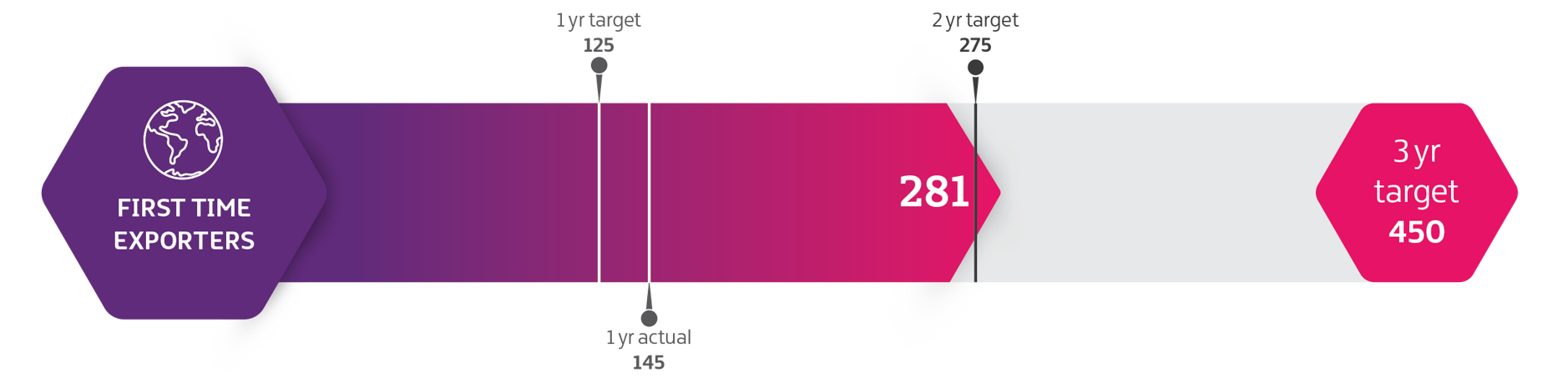
In 2025-26 we helped 136 businesses to export for the first time and 350 businesses to sell to a new market.
Our teams also work hard to promote Northern Ireland as a place to invest in a highly competitive market for mobile investment projects. In total, we secured 20 new investors for Northern Ireland in 2025-26, including Bank of America, Biller Genie, and Achilles. Some of these investments were secured with financial assistance, others through our advice and guidance.
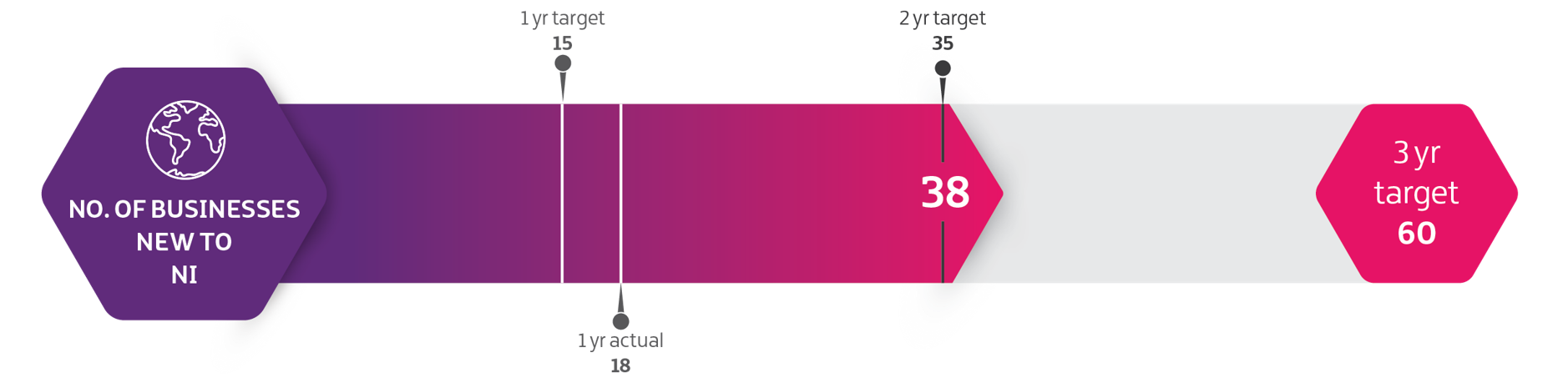
In most cases initial investment projects are relatively modest in the initial stages as companies pursue conservative ramp-up plans. However, the skills profile of the roles and their average salaries are well above the NI PSM. This trend towards smaller initial investments meant we did not meet this year’s target to support the creation of 900 good jobs by new to NI externally-owned companies.
However, many of the investors we attract go on to reinvest and last year we supported 155 reinvestments by existing investors, which will create 1,603 new jobs and support £255m of investment in our economy.
Developing and achieving sustainability
Our Business Strategy sets an overall target of £200 million of investment in low carbon and green economy investments, and we have already secured 87 per cent of our full three-year target.
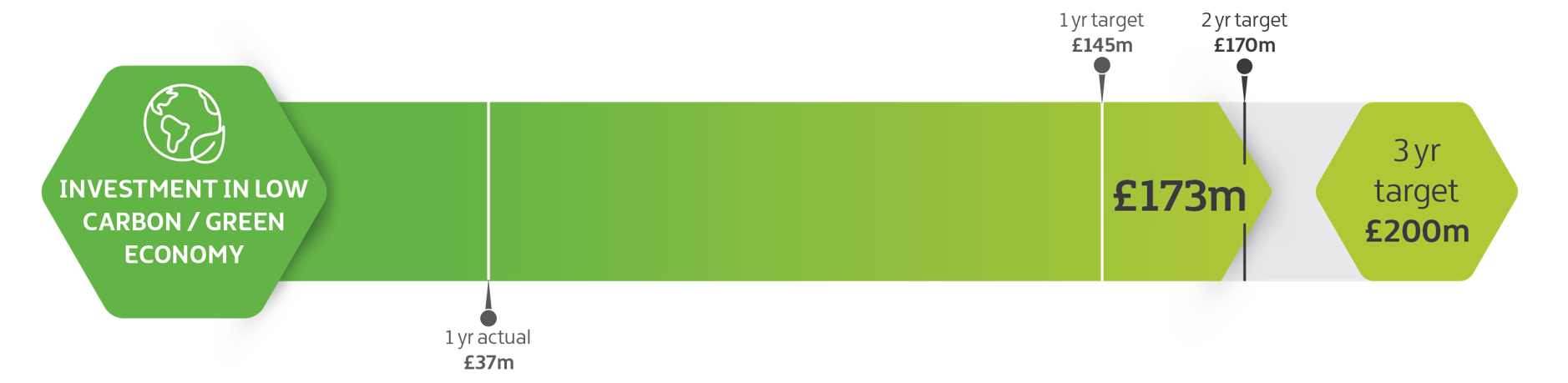
Significantly, 75 per cent of the investments made in 2025-26 to help companies develop and achieve sustainability were located outside the BMA.
Maximising City and Growth Deals
The City and Growth Deals are major infrastructure and investment programmes that will help create new jobs, raise productivity and drive sustainable economic growth over the next ten years.
We continue our work as investment decision maker with the various City and Growth Deal partners by providing advice and overseeing delivery to ensure the projects are commercially-focused.
Last year, the Ulster University-led Centre for Food and Drug Discovery (CFDD) was approved in the Causeway Coast and Glens Deal, which is a project that will help businesses with research and development to shape health, nutrition, and pharmaceuticals.
The contract for the Cognitive Analytics and Digital Robotics Innovation Centre (CADRIC), also led by Ulster University, was signed as part of the Derry City and Strabane District Council City Deal.
Construction was completed on this £98m Queen’s University project at Global Point as part of the Belfast City Region Deal. The Centre is already supporting our work to promote NI for inward investment and is working with our clients to support advanced manufacturing R&D. For example, Angoka is investing £1.8m to develop a cyber security solution to protect manufacturing businesses from the threat of cyber-attacks. It is developing this new solution with the help of AMIC. Our support for this project is part funded by the UK Government Shared Prosperity Fund (SPF).
Measuring our impact
The activity detailed here reflects the support we offered to businesses in 2025-26. As such, it is too soon to measure the full impact of that support.
However, we also measure longer-term impact in our Client Performance Indicators (CPI). Our CPIs are also released annually, and they collect performance data from our client portfolio across employment, sales, external sales and exports.
Our client portfolio comprises over 2,300 businesses, employing just under 150,000 people. From 2024 to 2025, our client companies experienced a 7 per cent increase in sales, and a 6 per cent increase in external sales, and a 7 per cent increase in exports.
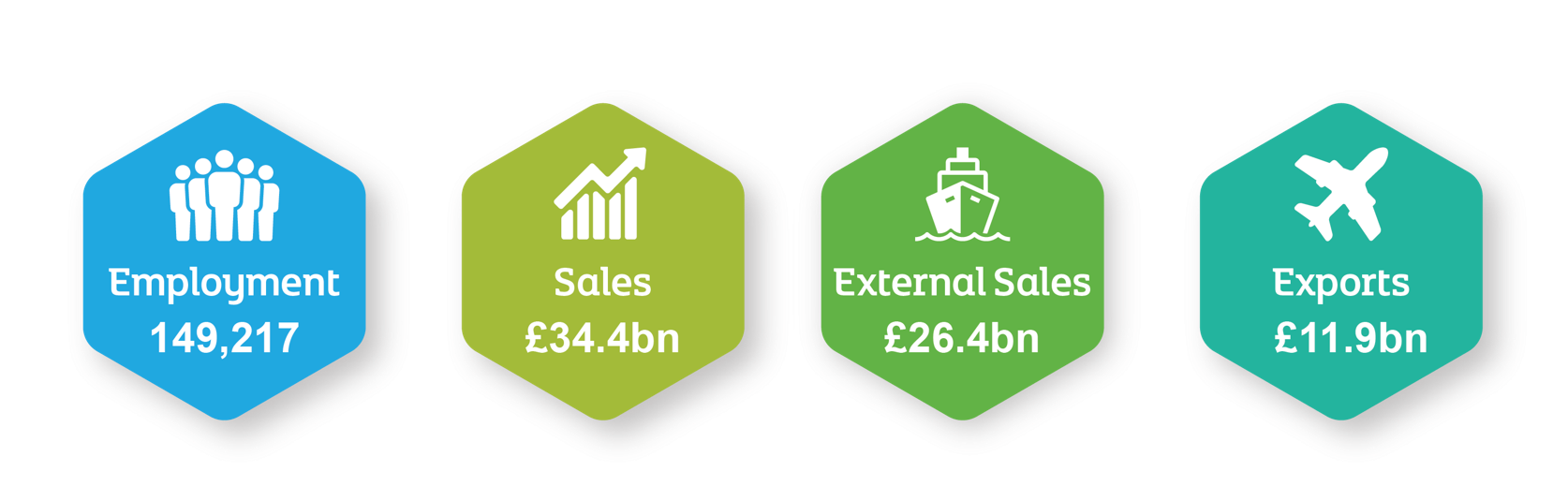
This data shows we’re on the right track and our support has helped clients grow their exports while maintaining steady employment.
Looking ahead
Geopolitical tensions, trade policy uncertainty, rising operational costs, increased competition, and technological change are set to dominate business decisions for the foreseeable future. Our 2025-26 results show our clients are resilient and ambitious, but these continued pressures are naturally going to make businesses cautious.
As with every public body, we have faced budgetary challenges in the first quarter of 2026-27. We have now received a contingency allocation to enable us to continue to support both local businesses and international investors. I am confident that we can still deliver good outcomes for our economy with the funds we have available as we move into the final year of our current Business Strategy.
Invest NI is very grateful to the clients, partners, and stakeholders that supported our work last year, and we look forward to delivering further investment in the year ahead.


Comments