
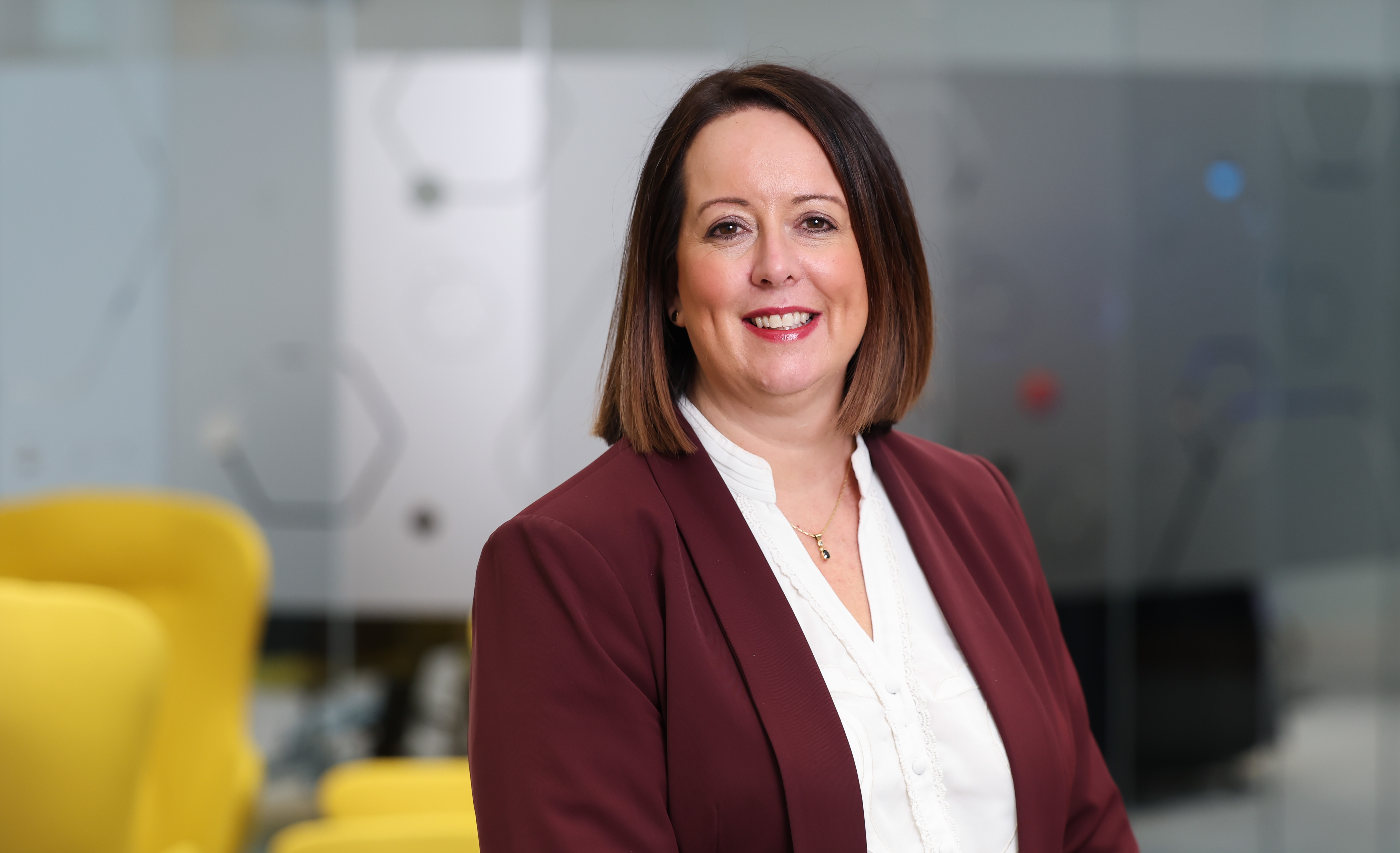
Alison Currie, Chief Development Officer
Why achieving regional balance is more than creating jobs outside Belfast

A shorter version of this article was originally published in the Irish News.
Achieving a more balanced regional economy is about ensuring that people and businesses, wherever they are located, can access opportunity, build resilience, and contribute to sustainable growth.
In Northern Ireland, regional balance is a shared, long‑term endeavour that requires coordinated action across the public sector, councils, businesses, academia and communities. Getting it right is essential for inclusive growth and the overall productivity and competitiveness of our economy
In this article, Alison Currie outlines why regional balance matters, why job creation alone is no longer enough, and how Invest NI is working with businesses and partners to support growth that is genuinely felt across the whole region.
What is regional balance?
Regional balance means encouraging development across the whole of Northern Ireland so that everyone, no matter where they live, has equal access to opportunities, services, jobs, health and prosperity.
As a predominantly rural region, Northern Ireland has long experienced structural regional disparities. Addressing these imbalances is crucial to ensuring that all areas can share in prosperity and development.
However, improving regional balance does not mean pitting other regions against Belfast. There are areas of deprivation within the city that also need to be addressed. For example, North and West Belfast have the highest child poverty rates in Northern Ireland. Regional balance is not an “either/or” debate, it is about ensuring that no community is left behind
So, how do we encourage regional development to ensure no area is left behind?
The place-based approach
There are many layers to achieving regional balance. Every region in Northern Ireland has different strengths, challenges and opportunities, so a ‘one-size-fits-all’ doesn’t work.
According to research by Ulster University, a place-based approach is the best way of achieving regional balance. In its report, ‘Delivering balanced regional growth in Northern Ireland’, Ulster University gives insight into key place-based approaches to help improve regional growth.
Regional and local challenges – such as infrastructure, connectivity, the provision of services, planning and the availability of skills – require purposeful partnership and meaningful cooperation across all stakeholders and partners.
The Department for the Economy’s Sub-Regional Economic Plan reflects this, empowering local stakeholders to identify their own economic priorities and tackle barriers to growth.
Initiatives like the City and Growth Deals, Labour Market Partnerships, and the Local Economic Partnerships (LEPs) are part of a place-focused policy.
The LEPs bring together councils, businesses, education institutions and civil society to help ensure that interventions are rooted in local insight, whether that’s addressing skills gaps, supporting entrepreneurship, or building the infrastructure needed to attract and retain investment.
Invest NI’s focus on places and partnerships
Invest NI’s contribution to regional balance is to support businesses to improve productivity, export, invest in jobs, skills, research and development (R&D), and sustainability. We want to drive growth that aligns with Northern Ireland’s wider economic priorities.
For the first time, Invest NI’s Business Strategy includes a specific regional target: by Year 3, we aim for 65% of the company investments we support to be outside the Belfast Metropolitan Area (BMA). It’s a challenging target but it reflects a clear ambition to play our part in achieving regional balance.
To do this, we are working more closely with councils and regional partners to build a balanced pattern of growth and opportunity.
Entrepreneurship is one of the most powerful drivers of regional balance. Homegrown businesses are rooted in their local areas, and when they scale successfully, they can create jobs and boost skills. We have created three new programmes specifically designed to support founders and entrepreneurs – Founder Labs, Ambition to Grow and the Business Innovation Grant – providing advice, mentoring and financial assistance at different stages of the business’ development.
A shift from job creation to productivity
BDO’s employment index, which monitors trends in hiring intentions, headcount, and labour, continues to fall in the UK. We are seeing similar pressures in Northern Ireland with many businesses facing high vacancy rates, skills shortages, and reliance on temporary employees. As Northern Ireland is nearly at full employment, job creation is not the main economic driver anymore.
With hiring intentions weakening and skills shortages persisting, we need to complement job creation with other ways to stimulate economic growth.
That’s why the Programme for Government and Department for the Economy’s Economic Vision are focused on boosting productivity, innovation, and encouraging growth through greater efficiency and higher output. Northern Ireland’s productivity is among the worst in the UK, and we want to move this dial.
That’s also why, within Invest NI’s Business Strategy, we have a strong focus on productivity and encouraging businesses to improve efficiency and increase exports. We have introduced initiatives such as the Agri-Food Investment Initiative, which aims to help increase efficiency, support capacity building, and growth through innovation and new product development.
Job creation, however, is still important, and we continue to help our client companies create good quality jobs. In 2024/25, we supported 3,020 new good quality jobs across the region.
A long-term commitment
Achieving regional balance is a long-term commitment to creating the conditions for sustainable growth in every part of Northern Ireland, recognising the distinct strengths, challenges and opportunities that exist in different places.
For Invest NI, this means supporting businesses to become more productive, innovative and export‑focused; helping entrepreneurs and local firms to scale; and working in partnership with councils and others to maximise opportunities and remove barriers to growth. But it also means recognising that regional balance cannot be delivered by one organisation alone.
Success will depend on continued collaboration across government, local leadership, business, and communities – aligned around a shared ambition to make better use of our talent, our places and our resources. Together, we can build a more resilient and competitive economy, where economic growth and prosperity is shared more widely.
At Invest NI, we are committed to turning regional balance from an aspiration into a reality for people and businesses across Northern Ireland.
About the Author - Alison Currie, Chief Development Officer at Invest NI
Alison Currie is Chief Development Officer at Invest NI and is responsible for its regional development agenda, regional business group, land and property, and a new client solutions group. She was previously the Director of Innovation and Entrepreneurship at InterTradeIreland and has over 20 years’ experience in economic development and innovation ecosystems in Northern Ireland, Ireland, and Scotland.

Comments